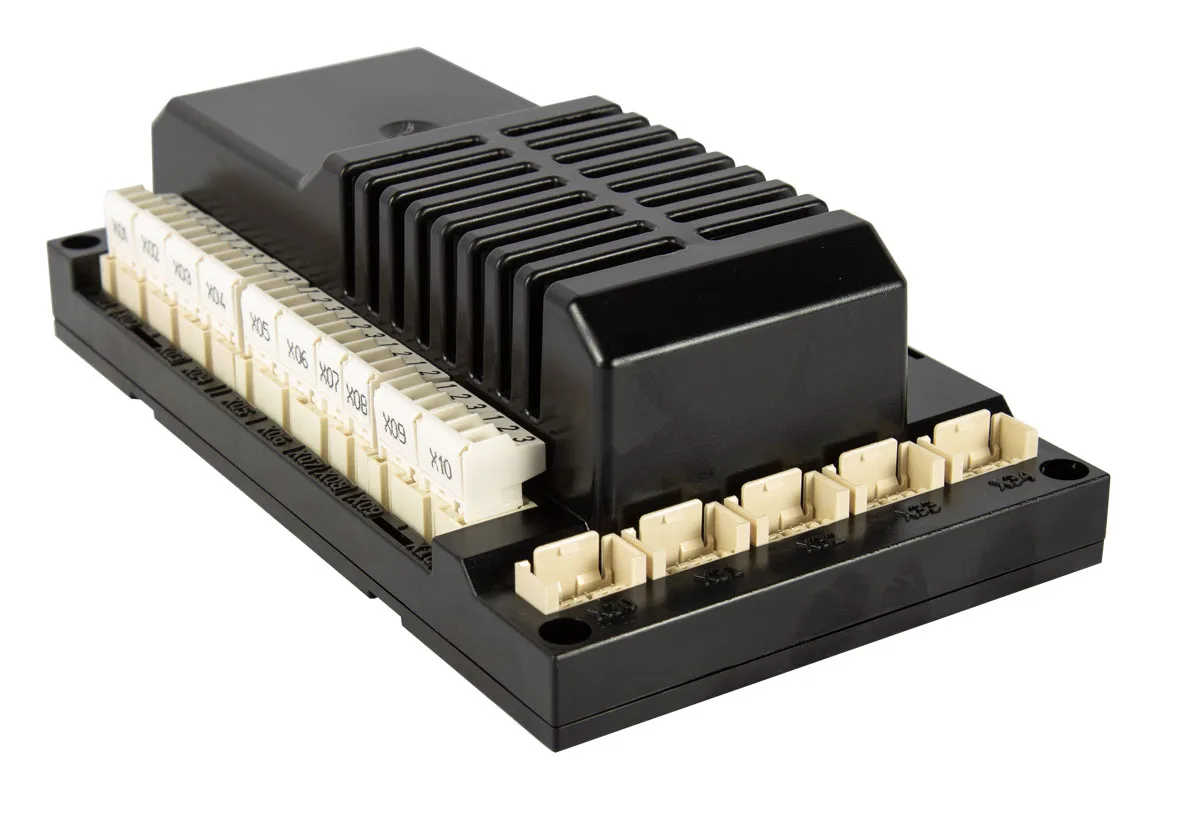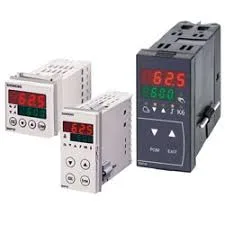
RWF Universal Controller
The Siemens RWF45, RWF50, and RWF55 series are PID-based controllers primarily used in burner and boiler automation, designed to provide precise control of process variables such as temperature and pressure. The RWF45 model represents the earlier and more basic version of the series, typically used in smaller-scale systems, offering limited input/output options and simpler control capabilities. The RWF50 is an improved version that provides broader sensor compatibility (such as Pt100, current, and voltage signals), enhanced PID control performance, and more flexible parameter configuration, making it suitable for standard industrial applications. The most advanced model, RWF55, offers significantly enhanced hardware and software features, including communication interfaces such as Modbus and Profibus for easy integration into automation systems, as well as improved display and user interface capabilities. It is particularly well-suited for complex burner systems, HVAC applications, and demanding industrial process control environments where high performance and flexibility are required.
The Siemens RWF45, RWF50, and RWF55 series controllers are used in a wide range of applications, primarily in burner automation as well as heating and industrial process control systems; the RWF45 model is typically used in small-scale applications such as simple burner systems, small boilers, and basic temperature control processes, while the RWF50 is suited for medium-scale installations including hot water and steam boilers, HVAC systems, and standard industrial production lines where more precise and stable control is required. The most advanced model, RWF55, is designed for large and complex systems such as power plants, large industrial furnaces, and facilities in industries like chemicals and food processing where high precision and automation integration are critical; with communication capabilities like Modbus and Profibus, it enables seamless integration into centralized automation systems, allowing remote monitoring and control while significantly improving process efficiency, energy savings, and system reliability.